
Education
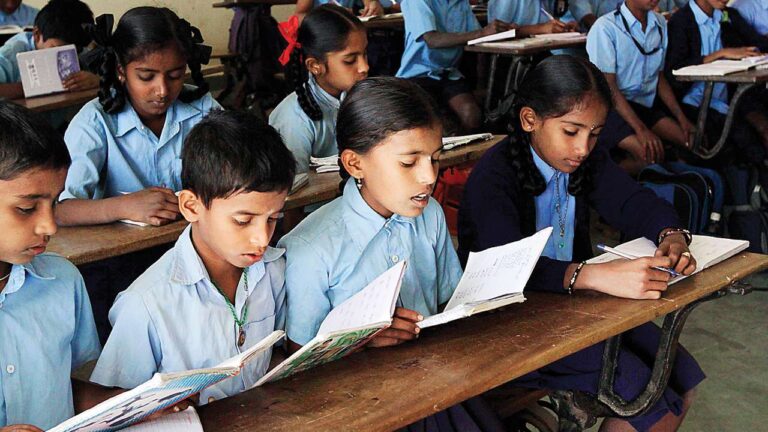
Investing in girls’ education transforms communities, countries and the entire world. Girls who receive an education are less likely to marry young and live in poverty. Girls who receive an education are more likely to be employed and earn higher incomes. They participate in the decisions that most affect them, and build better futures for themselves and their families.
Girls’ education is not only the right thing to do – it is also good for Global Development. It supports economic growth and helps mitigate climate change, fights poverty and builds stronger societies.
We know that education for girls is a big deal. But it doesn’t end with the first day of school. It’s about more than access to school and achieving gender parity in the classroom. It’s also about providing girls with the confidence and skills they need to succeed in the subjects, careers and life skills they pursue after school.
Girls’ education is not only the right thing to do – it is also good for Global Development. It supports economic growth and helps mitigate climate change, fights poverty and builds stronger societies.
We know that education for girls is a big deal. But it doesn’t end with the first day of school. It’s about more than access to school and achieving gender parity in the classroom. It’s also about providing girls with the confidence and skills they need to succeed in the subjects, careers and life skills they pursue after school.
What Happens When We Invest in Secondary Education for Girls?
The lifetime earnings of girls dramatically increase
National growth rates rise
Child marriage rates decline
Child mortality rates fall
Maternal mortality rates fall
Child stunting drops
Why do we see less girls in schools?
The reasons are many, but one is the lack of education opportunities for girls. Poor families often favour boys’ education over girls’, partly because of gender stereotypes and also because their only option for a better life is to get an education themselves.
Girls are barred from going to school in many parts of the world. Poor families often see girls as a burden, or believe that girls should not attend school because they need to do domestic work. Others fear being ostracized by their families or communities.
As a result, girls miss out on education and closed doors prevent them from getting a good job. Closing this gender gap could help bring an end to many of the challenges women face around the world.
Girls face many barriers when it comes to education. In some places, schools do not meet the safety, hygiene or sanitation needs of girls. In others, teaching practices are not gender-responsive and result in gender gaps in learning and skills development.
At times, girls are not afforded safety, hygiene and sanitation needs. In other places, the teaching practices that result in gender gaps in learning and skills development.
In some countries, girls and boys receive unequal education. In others, teaching practices are not gender-responsive and result in gender gaps in learning and skills development.
Over 80 million girls don't go to school, mostly because of their own communities' beliefs and practices. We can close the education gap by supporting schools that teach in a way that inspires girls and lifts them out of poverty.
Because investing in girls’ secondary education is one of the most transformative development strategies, we prioritize efforts that enable all girls to complete secondary education and develop the knowledge and skills they need for life and work.
Girls are barred from going to school in many parts of the world. Poor families often see girls as a burden, or believe that girls should not attend school because they need to do domestic work. Others fear being ostracized by their families or communities.
As a result, girls miss out on education and closed doors prevent them from getting a good job. Closing this gender gap could help bring an end to many of the challenges women face around the world.
Girls face many barriers when it comes to education. In some places, schools do not meet the safety, hygiene or sanitation needs of girls. In others, teaching practices are not gender-responsive and result in gender gaps in learning and skills development.
At times, girls are not afforded safety, hygiene and sanitation needs. In other places, the teaching practices that result in gender gaps in learning and skills development.
In some countries, girls and boys receive unequal education. In others, teaching practices are not gender-responsive and result in gender gaps in learning and skills development.
Over 80 million girls don't go to school, mostly because of their own communities' beliefs and practices. We can close the education gap by supporting schools that teach in a way that inspires girls and lifts them out of poverty.
Because investing in girls’ secondary education is one of the most transformative development strategies, we prioritize efforts that enable all girls to complete secondary education and develop the knowledge and skills they need for life and work.
If you wish to make a difference and support education program from girls, Click here.